
Introduction
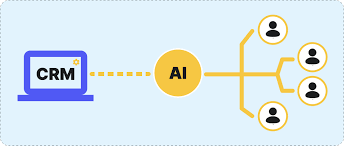
The world of customer relationship management (CRM) has transformed dramatically over the last decade. Traditional CRMs used to act merely as digital contact lists, but today they have evolved into intelligent, AI-powered platforms that anticipate customer needs, automate workflows, and enhance personalization.
In the age of digital-first business, artificial intelligence (AI) and automation are no longer optional — they are the future of customer experience (CX). Businesses that fail to adopt these technologies risk falling behind competitors who deliver faster, smarter, and more personalized services.
This article explores how AI and automation are shaping CRM systems in 2025 and beyond.
Key Takeaways
- AI in CRM = predictive analytics, chatbots, personalization.
- Automation in CRM = workflow efficiency, reminders, campaigns.
- Together, they improve sales, marketing, and customer support.
- Popular platforms: Salesforce, HubSpot, Zoho, Dynamics 365.
- Future = Emotion AI, voice-enabled CRM, autonomous systems.
What is AI in CRM?
AI in CRM refers to the integration of machine learning, natural language processing (NLP), and predictive analytics into CRM software.
Capabilities of AI in CRM:
- Predict customer behavior.
- Provide intelligent recommendations.
- Automate repetitive tasks.
- Deliver personalized content.
- Analyze customer sentiment.
What is Automation in CRM?
CRM automation focuses on reducing manual work by setting up automated workflows, reminders, and responses.
Key Functions of Automation:
- Automated email campaigns.
- Sales pipeline reminders.
- Customer support ticket routing.
- Follow-up scheduling.
- Lead scoring and assignment.
Benefits of AI and Automation in CRM
1. Hyper-Personalization
AI analyzes customer preferences and purchase history to deliver tailored recommendations.
Example: Amazon suggests products based on browsing behavior.
2. Smarter Lead Management
Automation scores leads based on engagement levels, while AI predicts which leads are more likely to convert.
3. Improved Customer Support
AI-powered chatbots and virtual assistants handle FAQs and provide 24/7 assistance.
4. Time & Cost Efficiency
Automation reduces repetitive manual work, allowing teams to focus on strategic tasks.
5. Predictive Analytics
AI forecasts sales trends and identifies potential churn risks.
Use Cases of AI and Automation in CRM
📌 Sales
- Predictive lead scoring.
- AI-driven sales forecasting.
- Automated task reminders for sales reps.
📌 Marketing
- Personalized email campaigns.
- AI-driven ad targeting.
- Customer segmentation.
📌 Customer Support
- Chatbots answering routine questions.
- Intelligent ticket routing.
- Sentiment analysis of support conversations.
📌 E-commerce
- Product recommendations.
- Automated abandoned cart recovery.
- AI-powered upselling & cross-selling.
AI-Powered CRM Features in 2025
- ChatGPT-like Virtual Assistants inside CRM systems.
- Voice-Enabled CRM (voice-to-text commands for updates).
- Predictive Sales Insights using AI models.
- AI-powered Customer Journey Mapping.
- Automated Content Generation for emails and proposals.
Automation Features in Modern CRMs
- Workflow Automation: Trigger actions based on customer behavior.
- Email Drip Campaigns: Nurture leads automatically.
- Smart Notifications: Remind sales reps of follow-ups.
- Task Assignment Rules: Assign leads to agents automatically.
- Calendar Integration: Sync meetings and calls.
AI and Automation in Popular CRM Platforms
Salesforce Einstein
AI engine for predictive analytics and recommendations.
HubSpot CRM
Marketing automation, predictive lead scoring, and AI content tools.
Zoho Zia
AI assistant providing insights, forecasts, and voice commands.
Microsoft Dynamics 365
AI for sales forecasting, customer insights, and process automation.
Challenges of AI and Automation in CRM
- High Implementation Costs – Premium AI-powered CRMs can be expensive.
- Data Privacy Concerns – Handling large amounts of customer data requires compliance.
- Over-Automation – Customers may feel disconnected without human touch.
- Training Requirements – Employees need proper training to maximize AI features.
Future Trends of AI and Automation in CRM
- Emotion AI (Affective Computing): Analyzing customer emotions during conversations.
- AI-Powered Predictive Retention: Identifying churn before it happens.
- Voice & AR Integration: Voice commands and AR-based customer experiences.
- Fully Autonomous CRM: Systems handling sales and support with minimal human input.
- AI-Driven Compliance: Automatic GDPR/CCPA compliance checks.
Case Studies
Case Study 1: Sephora
Uses AI chatbots to recommend beauty products, increasing engagement and sales.
Case Study 2: Netflix
AI-powered recommendations keep users hooked, boosting retention.
Case Study 3: Coca-Cola
Uses AI-driven CRM analytics to improve marketing campaigns and track customer sentiment.
FAQs
Q1. How does AI improve CRM?
By predicting customer needs, automating workflows, and enhancing personalization.
Q2. Are AI-powered CRMs expensive?
Costs vary — some platforms like HubSpot offer free AI features, while Salesforce may cost more.
Q3. Can automation replace human agents?
No, automation supports agents by handling repetitive tasks, but complex queries still need humans.
Q4. Is AI in CRM safe?
Yes, but businesses must comply with data privacy laws like GDPR.
Q5. Which industries benefit the most from AI-driven CRM?
E-commerce, finance, healthcare, and SaaS companies.
Q6. Can AI predict customer churn?
Yes, predictive analytics can identify at-risk customers before they leave.
Q7. Will AI make CRMs fully autonomous?
Possibly in the future, but human oversight will remain critical.
Conclusion
AI and automation are revolutionizing CRM systems by enhancing personalization, automating workflows, and predicting customer behavior. Businesses adopting these technologies gain a competitive edge by delivering superior customer experiences.
The future of CRM is not just about managing relationships — it’s about anticipating customer needs before they arise.